Home › Guides › Vokey SM11 vs. SM10
WedgesVokey SM11 vs. SM10Grooves, CG, lofts and price compared with Titleist's official numbers
Updated: Oct 5, 2026Contains affiliate links
If you're using an SM10 now, you don't need to replace it until the grooves wear. The heat treatment that makes grooves last longer is already in the previous model. If you're buying now: when in doubt, get the SM11; if you want a 62° or a lower price, get the SM10.
5 Differences Between the SM10 and SM11
- Grooves: 5% more volume than the previous model
- Loft: 44° was added, and 62° is gone from the official release (the SM10 runs 46–62°)
- Center of gravity: at the same loft, it stays in the same place even when the sole shape changes
- K Grind: bounce goes from 14° to 12°
- Price: ¥2,200 more at list price (¥29,700 vs ¥27,500)
Material, manufacturing method and finish are the same. Both also get the heat treatment that makes the grooves last longer.

The Gear Nerd's Pick (if you're buying now)
Titleist Vokey Design SM11 (¥29,700 each) If I were buying one wedge today, this is the one. What clinches it for me: Titleist says it built them so that at the same loft, the CG stays in the same place even with a different sole shape (grind). Grinding a sole removes steel, and the CG moves with it. With that difference gone, if you're torn between the M and D at 58°, you can choose on sole shape alone. The new 44° also helps, because it bridges more easily to modern irons with strong PW (pitching wedge) lofts. The downsides: there's no 62° in the official release, and it costs ¥2,200 more than the previous model.
Where to buy it cheapestRakuten Ichiba, as of Oct 5, 2026 10:17
Titleist Vokey SM111 club, new, lowest price first
 Image: Rakuten Ichiba
- 美-健康ゴルフ¥28,215+ shippingSee today's price on Rakuten
- ゴルフセブン¥28,215+ shippingSee today's price on Rakuten
- Victoria Golf 楽天市場支店¥29,000+ shippingSee today's price on Rakuten
Used from ¥13,200 (Golf Ace No.3 Rakuten Ichiba store) See used
Titleist Vokey SM101 club, new, lowest price first
 Image: Rakuten Ichiba
- 楽天GORA店 Supported by GOLF5¥19,800+ shippingSee today's price on Rakuten
- アルペン楽天市場店¥19,800+ shippingSee today's price on Rakuten
- ゴルフショップジョプロ楽天市場店¥19,800free shippingSee today's price on Rakuten
Used from ¥10,626 (Golf Partner used club store) See used
Comparing the cheapest new prices, the gap is ¥8,415.
Ad: New units (right-handed) from Japanese retailers found in a Rakuten Ichiba search, lowest price first. Used and grey-import items are excluded. Prices, shipping and stock change. Prices can also differ by loft or shaft, so check the product page before you buy.
For players who want a 62°, want to save money, or whose grooves still have life
Titleist Vokey Design SM10 (1 club, ¥27,500 at launch) Lofts run 46–62°, including the 62° that isn't in the new model's official release. It also has the heat treatment that makes grooves last longer.
In this article
- Bottom line: three conditions to check yourself
- SM11 vs. SM10 spec comparison
- What changed in the SM11, and what the manufacturer says it does
- The Gear Nerd's Take: reading the numbers
- SM11 loft and bounce combinations
- Which to choose: who should get the SM11, and who the SM10
- Which to Buy Now: Look at the Store-Price Gap, Not the List-Price Gap
- FAQ
Bottom line: let your grooves decide; if in doubt, get the SM11
There are three conditions, and you can check each one yourself. Work through them from the top.
1. Are the grooves on your current SM10 worn? If not, don't replace it. Check your grooves first. The previous model has heat treatment too, so switching won't change groove life much.
2. You want a 62°, want one with an N.S.PRO 950GH neo fitted from the start, or want to keep the cost down. If even one applies, go with the SM10.
3. Otherwise, the SM11. Especially if your PW is 41–43°, you can start at 44° and keep the gaps small.
To check your grooves, put the face of your most-used 56° or 58° next to a club you hardly use. If the edges look different, or catch differently when you run a finger over them, the one you use more is worn. Your PW loft is in the spec table on your iron maker's official website. Once you have it, the next step is to settle how many wedges to carry and how to gap them, using How many wedges to carry.
SM11 vs. SM10 spec comparison
Material, process and finishes are the same.
| Item | SM11 (2026) | SM10 (2024) |
|---|---|---|
| Release date | Feb 20, 2026 (early release on the official online store: Jan 20) | Mar 8, 2024 |
| Price (incl. tax) | ¥29,700 | ¥27,500 |
| Loft | 44–60° (44° newly added) | 46–62° |
| Loft/sole combinations | 27 (6 grinds: F, S, M, D, K, T) | 25 |
| K Grind bounce | 12° | 14° |
| 58.06K / 60.06K | In the lineup from launch | Added Mar 7, 2025 |
| Grooves | Three shapes by loft band. Volume up 5% vs. the previous model | TX9 grooves (designed individually for each loft) |
| Fine face texture | Directional Face Texture (new) | Micro-texture between the grooves |
| CG | CG position unified within each loft + higher and more toward the heel as loft increases | Progressive CG (short and long hosels used depending on loft) |
| Heat treatment | Induction heat treatment in the groove area. About 2x the durability of untreated grooves | Heat treatment in the impact area. 2x durability |
| Material / process | Soft carbon steel, cast (made in Japan) | Soft carbon steel, cast |
| Finish | Tour Chrome, Nickel, Jet Black | Tour Chrome, Nickel, Jet Black |
| Stock shaft | Dynamic Gold, BV105 | Dynamic Gold, BV105, N.S.PRO 950GH neo |
The price goes from ¥27,500 to ¥29,700, up ¥2,200. Buy 3 and the difference comes to ¥6,600.
What changed in the SM11, and what the manufacturer says it does
There are four new construction features (not counting price and stock shafts).
1. Grooves: three shapes by loft band, 5% more volume
Construction: Deep, narrow grooves on 44–52°, an in-between shape on 54° and 56°, and wide, shallow grooves on 58° and 60°. Groove volume is 5% larger than on the previous model.
What the manufacturer says: consistent spin on full shots with 44–52°, and efficient channeling of sand, grass and moisture around the green with 58° and 60°.
2. Face: Directional Face Texture
Construction: A new treatment in which the fine texture between the grooves is angled toward the leading edge.
What the manufacturer says: it raises face friction and keeps the ball on the face longer, making spin control around the green more consistent (no figures published for the effect).
3. CG: at the same loft, the CG stays put whatever the sole
Construction: Within each loft, the CG position is the same even with different grinds (sole shapes). Across the loft bands, it sits low and toward the face center on 44–52°, in between on 54° and 56°, and high and toward the heel on 58° and 60°.
What the manufacturer says: more consistent flight and feel whichever grind you choose.
The previous SM10 shifted the CG by loft by using different hosel lengths (the neck the shaft goes into). The new model adds "aligned within each loft" on top of that.
4. Loft and sole options: 44° added, K Grind now 12°
The 44.10F is new, making the official release's loft range 44–60°. Titleist says it is "for players who want a loft stronger than 46°, to set proper gaps with their iron set."
The K Grind's bounce went from 14° to 12°.
The Gear Nerd's Take: reading the numbers
Reading the numbers, what matters is the 44° and the aligned CG. The groove heat treatment is no reason to upgrade.
1. The SM10 already had heat treatment, so groove life won't change much
"About 2x groove durability" looks like a new feature, but the SM10 release also says "heat treatment in the impact area doubles durability." Long-lasting grooves go back to the previous model. It's not a new benefit.
Wedge grooves do wear down with bunker play and practice. Your most-used 56° and 58° wear first. Decide when to replace them by the condition of the grooves, not the model name.
2. The "44°" matters if your irons have a strong-lofted PW
PW lofts on current irons range from 41° to 47°. Add wedges starting at 46° to a "strong" set with a 41–43° PW, and you get a 3–5° gap, which easily creates a jump in full-shot distance. A 44° lets you close that gap to 1–3°.
Your PW decides where your wedges start. The new 44° adds one more option. More in How many wedges to carry.
3. Aligning the CG takes more work than it looks
Changing the sole shape also moves the CG, because grinding removes steel.
To get "the same CG for every sole at a given loft," the thickness has to be tailored for each grind at the mold stage. Making finely varied shapes is something casting does well, and the SM11 is cast.
4. Soft carbon steel makes loft and lie adjustments easy
Both models are soft carbon steel, which bends more easily than stainless, so a club fitter can adjust loft or lie by 1–2°. But strengthening the loft reduces bounce. If you'd need a big change, choose that loft from the start to make the most of the sole's original shape.
SM11 loft and bounce combinations
Bounce is a rough gauge of how much the sole resists digging into the ground. From 54° up, you can choose from 4–5 grinds (sole shapes). When in doubt, go for the middle: 10–12°.
| Loft | Available grinds (bounce) |
|---|---|
| 44°, 46°, 48° | F (10°) |
| 50°, 52° | F (8°, 12°) |
| 54°, 56° | S (10°), D (12°), F (14°), M (8°) |
| 58°, 60° | S (10°), D (12°), K (12°), T (4°), M (8°) |
The higher the number, the less the leading edge digs in when you hit it fat, which helps in bunkers and soft turf. The lower the number, the less the leading edge rides up on firm ground or with the face open.
Which to choose: who should get the SM11, and who the SM10
It comes down to your PW loft and whether you use a 62°.
 Rakuten Ichiba / AdVokey SM11
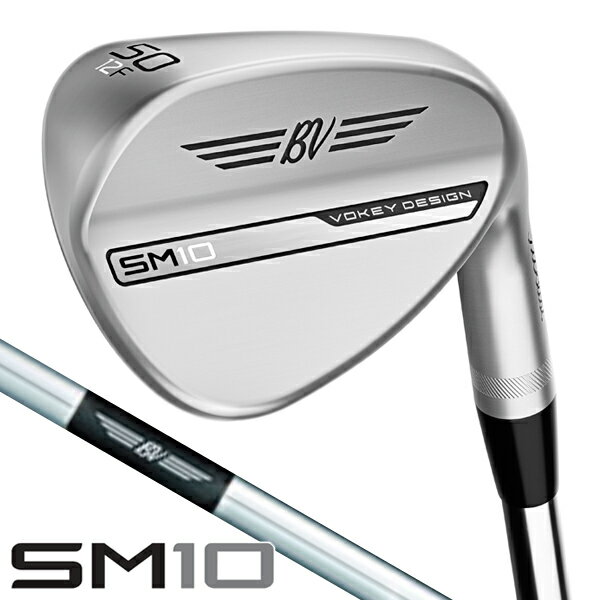 Rakuten Ichiba / AdVokey SM10
Product images: Rakuten Ichiba (Ad). Tap an image to go to its Rakuten Ichiba product page.
Who the new SM11 is for
- Players with strong-lofted irons and a PW around 41–43° who want their wedges to start at 44°
- Players who want different sole shapes for different lofts (the CG stays aligned at each loft)
- Players who want the K Grind with less bounce (12°) than on the SM10
Who's fine with the SM10
- Players who use a 62° (the SM11's official release only goes up to 60°)
- Players who want a wedge with N.S.PRO 950GH neo as stock (the SM11's stock shafts are Dynamic Gold and BV105)
- Players who want a lower price per 1 club (¥2,200 difference at MSRP)
Who doesn't need to buy now
- Players whose SM10 grooves still have life left
- Players who simply assume "it's new, so it must spin more." No figures have been published for the face texture's effect
Which to Buy Now: Look at the Store-Price Gap, Not the List-Price Gap
The list-price gap is ¥2,200. At that, you would probably just take the new model.
But store prices tell a different story.
Comparing the cheapest new listings of each on Rakuten Ichiba on Oct 5, 2026, the SM11 was ¥28,215 and the SM10 was ¥19,800. The gap was ¥8,415 (see “Where to buy it cheapest” at the top of this page; prices change daily).
Buy three and that is about ¥25,000, enough for one more wedge (author's calculation).
What you get for paying that gap is the five things above. Here is my answer.
- Your irons have a 41–43° PW → SM11. Only the SM11 lets you start at 44°. That is a gap price cannot close.
- You want to try several sole shapes at 58° or 60° → SM11. The center of gravity stays the same when the sole changes, so you can choose on shape alone.
- You are just filling in 3 wedges from 46° up with soles you have already settled on → SM10. The groove heat treatment is the same. I can't find a reason in the numbers to pay a gap of just over ¥8,000.
- You want a 62° → SM10. The new model's official release has no 62°.
If you buy the SM10, check one thing first:
whether the loft and sole combination you want is still in stores. With a previous model, stock depends on the combination. Before you look at prices, search by model code (for example, 58.12D).
If you still can't decide, I recommend the SM11. As I wrote in The Gear Nerd's Pick, the design that keeps the center of gravity consistent is the one part you can't swap out later.
FAQ
What's the biggest difference between the SM11 and SM10?
Going by the official release: the grooves have 5% more volume, and the loft range moved from 46–62° to 44–60°. On top of that, the CG position is now aligned within each loft, and the price went from ¥27,500 to ¥29,700. The material (soft carbon steel), process (casting) and three finishes are unchanged.
Is it worth upgrading from the SM10 to the SM11?
If your SM10 grooves aren't worn yet, there's little reason to rush. The SM10 also has heat-treated grooves. The SM11 makes sense if you want a 44°, want different soles for different lofts, or feel your spin has dropped because your grooves are worn.
Does the SM11 come in 62°?
As of Sep 15, 2026, the lofts listed in Titleist's SM11 news release are 44–60°, with no mention of 62°. The SM10 was 46–62°.
What's the bounce on the SM11 K Grind?
The 58.12K and 60.12K are 12° (14° on the SM10). There are also lower-bounce 58.06K and 60.06K (6°) options.
SM10 or SM11: which should I buy right now?
If your irons have a 41–43° PW, or you want to choose your sole shape at 58° or 60°, get the SM11. If you are just filling in from 46° up with soles you have already settled on, the marked-down SM10 is enough. On Rakuten Ichiba on Oct 5, 2026, the gap between the cheapest new listings of each was ¥8,415. If you want a 62°, get the SM10.
Ready to choose? Start here
Related reading
Sources for this article
- Titleist news release: Vokey Design SM11 wedges (Jan 20, 2026)
- Titleist official news: Introducing the Vokey Design SM11 wedges
- Titleist official: Vokey SM11
- Titleist news release: Vokey Design SM10 wedges (Jan 23, 2024)
- Titleist news release: 58.06K and 60.06K added to the SM10 (Jan 17, 2025)
- GDO Gear Catalog: VOKEY SM11 wedges (bounce by loft)