Home › By brand › Dunlop (Srixon, XXIO) › Drivers
DriversSrixon and XXIO DriversThe four ZXi RKT models released in September 2026, and the XXIO 14, 14+ and Prime
Updated: Sep 13, 2026Contains affiliate links
Dunlop has two brands: Srixon, which is heavier and leans toward control, and XXIO, which is light and easy to swing. The difference shows clearly in driver total weight and length. I lined them up using Dunlop's official numbers, including the ZXi RKT released on Sep 12, 2026.
 Rakuten Ichiba / AdSrixon ZXi RKT
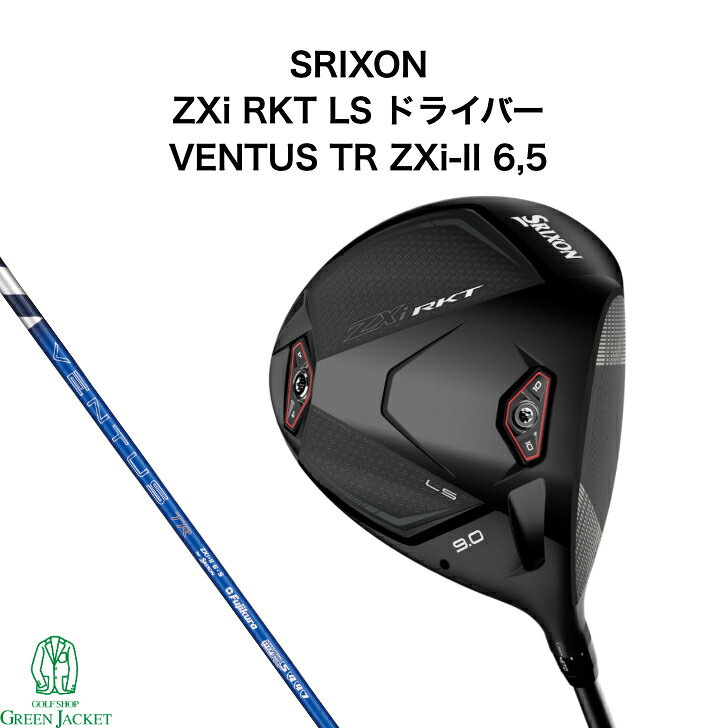 Rakuten Ichiba / AdSrixon ZXi RKT LS
 Rakuten Ichiba / AdSrixon ZXi RKT TR
 Rakuten Ichiba / AdSrixon ZXi RKT MAX
 Rakuten Ichiba / AdXXIO 14+
 Rakuten Ichiba / AdXXIO 14
 Rakuten Ichiba / AdXXIO Prime
Product images: Rakuten Ichiba (ad). Click an image to go to the Rakuten Ichiba sales page. Check price and stock on the sales page.
In this article
Bottom line: how I'd choose
Total weight is 304–313 g for the ZXi RKT, 300 g for the XXIO 14+, 281 g for the XXIO 14 and 257 g for the XXIO Prime. The lighter the model, the longer it gets (45.75 → 46 → 46.5 in).
The four ZXi RKT models share ¥89,100: if in doubt, the standard; for less curve, the MAX; for low spin, the LS; for a small head, the TR.
Drivers: Srixon ZXi RKT and XXIO
Srixon's ZXi RKT is the newest model, released Sep 12, 2026; all 4 models are ¥89,100.
| Model | Release date | Price (incl. tax) | Loft | Volume | Length | Total weight (standard) |
|---|---|---|---|---|---|---|
| Rakuten Ichiba / AdSrixon ZXi RKT | Sep 12, 2026 | ¥89,100 | 9 / 10.5° | 460cc | 45.75 in | 304g (S) |
| Rakuten Ichiba / AdSrixon ZXi RKT LS | Sep 12, 2026 | ¥89,100 | 9 / 10.5° | 460cc | 45.75 in | 313g (S) |
| Rakuten Ichiba / AdSrixon ZXi RKT TR | Sep 12, 2026 | ¥89,100 | 9 / 10.5° | 450cc | 45.75 in | 313g (S) |
| Rakuten Ichiba / AdSrixon ZXi RKT MAX | Sep 12, 2026 | ¥89,100 | 9 / 10.5° | 460cc | 45.75 in | 304g (S) |
| Rakuten Ichiba / AdXXIO 14+ | Nov 22, 2025 | ¥101,200 | 9 / 10.5° | 460cc | 45.75 in | 300g (S) |
| Rakuten Ichiba / AdXXIO 14 | Nov 22, 2025 | ¥101,200 | 9.5 / 10.5 / 11.5° | 460cc | 46 inches | 281g (R) |
| Rakuten Ichiba / AdXXIO Prime | Apr 5, 2025 | ¥143,000 | 10.5 / 11.5° | 460cc | 46.5 in | 257g (R) |
The four ZXi RKT models split by head shape and weight position.
- ZXi RKT: the standard. Adjust draw and fade with a 4 g toe weight and 10 g heel weight
- MAX: the highest moment of inertia in the series, so it curves least
- LS: a 10 g weight forward for a strong, low-spin flight
- TR: a small 450cc head for those who want to shape shots
The ZXi RKT face uses the same VR-Titanium as the XXIO 14. The price rose ¥3,300 from the previous ZXi (2024, ¥85,800).
The XXIO Prime has an ultralight design with a 35 g R shaft, and Dunlop gives a guide head speed of 28–41 m/s. My article on beginner drivers also covers weight guidelines.
Model differences and how to choose
The face technology, 45.75 in length and ¥89,100 price are shared by all four. Looking for differences with a gear nerd's eye, it comes down to head size and weight placement. The MAX, with weight at the back, is the most forgiving and highest launching; the LS, with weight forward, and the compact TR (450cc) lean low-spin and workable. Only the standard splits its weight between toe and heel instead of front and back, making it an in-between model for adjusting left-right curve.
ZXi RKT (standard)
For those who want a balanced model
- Players who want a balance of distance, workability and forgiveness (Dunlop calls it the all-round model)
- Players who want to adjust draw/fade with the weights
- Players who want to choose shaft flex across a head speed range of 33–48 m/s (official guide: S 40–48, SR 37–45, R 33–42 m/s; R is Diamana only)
ZXi RKT MAX
Suits
- Players who want a model that stays straight on off-center hits (Dunlop describes the highest MOI in the series, i.e. how little the head twists on mishits)
- Players who want to hit it high (high launch on the official chart)
ZXi RKT LS
Suits
- Players who want a strong, low-spin ball flight that holds up in the wind (Dunlop's description)
- Players with head speed of 40 m/s or more who suit a firmer shaft (stock is VENTUS TR ZXi-II 6 in S, official guide 40–48 m/s; SR is custom order)
ZXi RKT TR
For those who want to shape shots with a compact face
- Players who want to shape shots with a compact head (highest workability on the official chart)
- Players who want a strong, low-spin ball from a low, forward CG
What's new in the design, and what the maker says it does
RKT FACE ①: VR-Titanium + i-FLEX variable face thickness design
Construction: A face made from "VR-Titanium" (Super-TIX 52AFS), a high-strength silicon-containing titanium also used in the XXIO 14, with its thickness distribution set by stress simulation.
What Dunlop says: It combines better rebound with durability. Dunlop says the face can be 1–2g lighter than with previous materials, lowering the CG.
RKT FACE ②: VARIABLE ROLL DESIGN
Construction: A face shape where the upper face opens progressively and loft increases progressively from heel to toe.
What Dunlop says: It curbs excessive hook spin on strikes high on the toe, prevents spin from dropping too much, and improves directional stability on upper-face strikes, Dunlop says.
RKT FACE ③: REBOUND FRAME structure
Construction: A body using a carbon crown, built in four alternating zones: "soft-stiff-soft-stiff."
What Dunlop says: The face and body flex more, and combined with the other two technologies this delivers high ball speed and directional stability, Dunlop says (no figures published for the effect).
ACOUSTICORE and a deeper face
Construction: Sound-tuning ribs inside the sole combined with a carbon crown. All four models also have a taller face, and the face angle is squarer (straighter) than before.
What Dunlop says: It suppresses excess ringing for a solid, crisp sound with feedback, and enlarges the hitting area above the face center, according to Dunlop.
Before you buy last year's model: how it differs from the one before
| Current | Previous model | Difference in numbers |
|---|---|---|
| ZXi RKT | ZXi (Nov 2024) | Price ¥85,800 → ¥89,100. Face material Ti72S → VR-Titanium. Volume and length are the same |
| XXIO 14 | XXIO 13 | Price ¥92,400 → ¥101,200. Total weight 281 g (R) is the same. Dunlop announced 2.9 more yards at 38 m/s head speed |
FAQ
How do Srixon and XXIO differ?
By the numbers, weight and length differ. The standard total weight of the driver is 304–313 g (S) for the Srixon ZXi RKT, 281 g (R) for the XXIO 14 and 257 g (R) for the XXIO Prime. The lighter the model, the longer it is: 45.75 in, 46 in and 46.5 in, in that order.
How do the four ZXi RKT drivers differ?
All four are ¥89,100. The standard ZXi RKT lets you adjust draw and fade, the MAX curves least, the LS is a strong low-spin flight, and the TR is a small 450cc head built for control.
XXIO 14 or XXIO 14+: which should I choose?
The driver total weight is 281 g (R) for the 14 and 300 g (S) for the 14+. Dunlop gives the 14+ a head-speed guide of 33–48 m/s. If you can swing hard, the 14+; if you want an easy, light swing, the 14. The 7-iron is 28° on the 14 and 28.5° on the 14+, nearly the same.
Other Dunlop (Srixon, XXIO) clubs
Srixon and XXIO Irons Compared: 7-Iron Lofts Run 28–33°
Cleveland and XXIO Putters Compared: Three Price Tiers
Drivers from other makers
- Qi4D Drivers Compared: The Four Differ Only in Weighting
- Callaway QUANTUM Drivers Compared and How to Choose
- PING G440 Drivers: The Five Models Compared
- Titleist GTS Drivers: GTS2, GTS3 and GTS4 Compared
- Mizuno JPX ONE Drivers Compared: SELECT vs the Standard
Read these before you choose, so you don't get stuck
Best Drivers for Beginners 2026
Sources for this article
- Dunlop official wood list
- Srixon ZXi RKT Driver
- Srixon ZXi RKT LS
- Srixon ZXi RKT TR
- Srixon ZXi RKT MAX
- Sumitomo Rubber Industries: ZXi RKT launch (2026)
- XXIO 14 Driver
- XXIO 14+ Driver
- XXIO Prime Driver
- Sumitomo Rubber Industries: XXIO 14 launch (2025)
- Sumitomo Rubber Industries: XXIO Prime launch (2025)
- Previous ZXi Driver (2024, Club Library)
- XXIO 13 Driver (Club Library)