Home › Guides › The Gear Nerd's Pick Shafts
ShaftsThe Gear Nerd's Pick ShaftsI publish the conditions for a "pick" first, and as of Sep 2026, certify the 4 that meet them
Updated: Sep 16, 2026Contains affiliate links
On this site, I've named one "Gear Nerd's Pick" per article. But maybe I used it too casually. So I'm publishing all the conditions for calling something a pick, up front.
The basis is the maker's official spec tables. Reading weight, torque and butt thickness through a gear nerd's eyes, I decided. That's why you can verify all five conditions yourself by opening the official site. A "pick" you can't check is one I don't want to write.
If unsure, start with this
Fujikura SPEEDER NX WHITE (¥49,500) The four steps, 40, 50, 60 and 70, are all the same design, and you can move weight alone from 46.0g to 74.0g. Of the four, it's the shaft where retuning works best.
Where to buy this product
Fujikura SPEEDER NX WHITE (including sleeved)
 Image: Rakuten Ichiba
- Rakuten IchibaRecommendedRakuten product page
- Rakuten Ichiba (used)Used product page
Buying from outside Japan? Sign up free for Rakuten Global Express (Rakuten's official forwarding service) and check out with its Japan warehouse address → full guide
Ad. Links go to each store's product page ("Search ..." links go to search results). Price, shipping, stock and specs such as loft, shaft and number of clubs differ by store. Check the product page before you buy.

In this article
- Bottom line
- The five conditions for a pick: how to compare shafts
- The four that met them (official spec table values)
- Pick 1 SPEEDER NX WHITE: the most straightforward one, where you move weight alone
- Pick 2 TOUR AD VF: change the flex and the twist doesn't change
- Pick 3 TENSEI 1K Pro Orange RIP+: the widest weight range of the four
- Pick 4 26 VENTUS TR: at the same weight, choose the profile from three types
- Product images of the four
- Shafts I didn't pick, and why
- This list is updated without changing the conditions
- About the writer and sources
- FAQ
Bottom line
The five conditions for a pick. At least three weight steps; the official table lists weight, torque and butt thickness for each flex; it's clear what changes when you change flex at the same weight; the price is stated officially; and it's clear from the numbers who it's for.
As of Sep 16, 2026, the ones meeting all five are the SPEEDER NX WHITE, TOUR AD VF, TENSEI 1K Pro Orange RIP+ and 26 VENTUS TR, four in all.
The Mitsubishi Chemical Diamana GT was above the four in weight steps, but I couldn't confirm a price on the official site, so I held off certifying it this time.
The five conditions for a pick: how to compare shafts
Even under one name, a shaft becomes something different with each combination of weight, flex and profile. So I don't say "this model is good." I look at whether it's a model that gets you to the one that fits you by the numbers.
- At least three weight steps, in the same design. If it doesn't suit you, you can move weight alone without changing the character.
- The official table lists weight, torque and butt diameter for each flex. You can pick the weight and stiffness that fit your swing, so you're less likely to end up with "too heavy" or "too flimsy" after buying.
- It's clear what changes when you change flex within the same weight range. You know whether going from R to S makes it heavier or twists less, so you can choose against your draw bias or curve problem.
- The price is stated officially. I can't recommend something without the material to compare.
- It's clear from the numbers who it's for. The target golfer is clear from whether R exists, the lower weight limit and the profile label.
Conversely, "distance" and "draw bias" aren't in here. Results that change with the head and the swing can't be a shaft condition. The story that flex letters S and R have no shared standard is in Shaft flex S vs R.
The four that met them (official spec table values)
| Shafts | Weight steps | Weight range | Flex | Torque | Kick point | Price (incl. tax) |
|---|---|---|---|---|---|---|
| Fujikura SPEEDER NX WHITE | 4 steps (40 to 70) | 46.0–74.0g | R2, R, SR, S, X | 5.4 to 2.9° | Mid-tip | ¥49,500 |
| Graphite Design TOUR AD VF | 4 steps (VF-4 to 7) | 46–77g | R2, R1, SR, S, X, TX | 5.6 to 3.0° | Mid-butt | ¥49,500 |
| Mitsubishi Chemical TENSEI 1K Pro Orange RIP+ | 4 steps (50 to 80) | 51–88.5g | R, S, X, TX | 4.9 to 2.8° | Mid-butt (MID-HIGH) | ¥55,000 |
| Fujikura 26 VENTUS TR (BLUE, RED, BLACK) | 3 to 4 steps (varies by color) | 60.5–87.5g | R, S, X (varies by color) | 3.6 to 2.6° | BLUE mid-butt / RED mid-tip / BLACK butt | ¥55,000 |
Pick 1 SPEEDER NX WHITE: the most straightforward one, where you move weight alone
If I were handing one of the four to someone first, it's this. The reason is simple: it has the most ways out if it doesn't fit.
From the 40s to the 70s, torque goes 5.4°, 4.7°, 3.7°, 2.9°, shrinking smoothly as weight rises. Within the 50s, the R is 51.5g, the S 54.5g and the X 56.0g. Butt thickness runs from 15.20mm on the R to 15.35mm on the X in 0.05mm steps. What happens when you go up one flex is right there in the table.
The weak points are clear too. R exists only in the 40s and 50s; the 60s start at SR and the 70s at S. If you want a 60g-range shaft in R, you can't choose this model. It's also a mid-tip profile, so it doesn't suit golfers troubled by a ball that's too high.
Great for you if you
- You want to retune within ±10g of your current shaft's weight
- You struggle to launch the ball and want a little draw bias
- It's your first custom shaft and you want to keep the room for error small
- You want to compare R, SR and S in the 50g range
Pick 2 TOUR AD VF: change the flex and the twist doesn't change
What I like best in the TOUR AD VF table is that torque is the same for every flex within a weight range. VF-5 is 4.3° in R2, S and X alike, and VF-6 is 3.3° from SR to TX.
So if you go stiffer, the twist stays the same. It's built so the change of "I went to S and suddenly can't draw it" is less likely. I think this trait is welcome for golfers who can't decide on flex. Weight has four steps, from 46g for the VF-4 to 77g for the VF-7. It's made in Japan, and the official table even lists the length of the parallel section on the tip side.
The weak point is the profile. Every model is mid-butt, so even if a golfer who struggles to launch picks a light model, this isn't a shaft to expect easy launch from. Also the VF-4 goes only up to S, with no X.
Great for you if you
- You want to change the flex without changing directional tendency
- You like the butt-side bend of a mid-butt profile
- You may raise weight into the 70g range (VF-7 S 74g)
- You care about Japan-made
Pick 3 TENSEI 1K Pro Orange RIP+: the widest weight range of the four
From 51g to 88.5g. It has the widest weight range of the four, and the 50s and 60s also have an R. The strength is that you can search the same design whether you want lighter or heavier.
Mitsubishi Chemical says it aimed for a light swing feel with its "RIP+ technology," which resists twist at the tip, and a counterbalance design that weights the butt. Compared with the previous TENSEI Pro Orange 1K in the 60S, it goes from 69g and 3.0° of torque to 64g and 3.6°. Lighter, and a little more twist.
The weak point is the butt-heavy design itself. Built at the same length with the same head, you feel less head weight when you swing. Golfers who want the head to work will need adjustment when building. I also don't recommend that someone who liked the previous one buy it thinking it's the same. By the numbers, it's something else.
Great for you if you
- You want to choose from R to TX in one design
- You want heavy shafts in the 80g range as candidates too
- You like a heavy butt and a light, free-swinging feel
- You found the previous orange heavy or stiff
Pick 4 26 VENTUS TR: at the same weight, choose the profile from three types
The 26 VENTUS TR isn't one model but three colors: BLUE (mid-butt), RED (mid-tip) and BLACK (butt). And the 5 is about 61g, the 6 is 69.5g and the 7 is 79.5g, nearly the same weight across colors.
This is convenient when fitting. Once you decide weight, you can swap only where it bends and compare. Of the four, only this series suits "choosing the profile." The BLACK has the same weight in S and X, with only torque changing. It's built so going stiffer doesn't make it heavier.
The weak point is the lower limit. The lightest is 60.5g (the R of the RED 5), with nothing in the 50g range. And the BLACK has no R. I don't recommend this color to golfers whose head speed doesn't reach 40 m/s.
Great for you if you
- Weight is settled and you want to compare where it bends
- You use the 60 to 80g range
- You want to adjust ball height by profile (RED to raise, BLACK to lower)
- You don't want weight to change when you go stiffer (BLACK)
Why this order
All four meet the conditions. On top of that, I ranked them by how many ways there are to retune if it doesn't fit. It is not the order they sell in.
| Rank | Model | Why I ranked it here |
|---|---|---|
| Pick 1 | Fujikura SPEEDER NX WHITE | Weight runs from the 40s to the 70s in 4 steps. As it gets heavier, torque shrinks smoothly from 5.4° to 2.9°, and butt thickness changes in 0.05mm steps. The most ways out if it doesn't fit. The price is also ¥49,500. |
| Pick 2 | Graphite Design TOUR AD VF | Torque is the same across flexes within a weight range. Change the stiffness and the twist doesn't change. It falls short of Pick 1 because every model is mid-butt, with no means of adding easy launch. |
| Pick 3 | Mitsubishi Chemical TENSEI 1K Pro Orange RIP+ | Weight range is 51g to 88.5g, the widest of the 4. I ranked it No. 3 because the butt-heavy design needs adjusting when you build it. The price is also ¥55,000, ¥5,500 more than the 2 above. |
| Pick 4 | Fujikura 26 VENTUS TR | Only this series lets you choose among three profiles at the same weight. I ranked it fourth because there's nothing in the 50g range and the BLACK has no R. The range of golfers it suits is the narrowest of the four. |
Change the criteria and the order changes too. Reread it according to which criterion you look at first.
Product images of the four
 Rakuten Ichiba / AdSPEEDER NX WHITE
 Rakuten Ichiba / AdTOUR AD VF
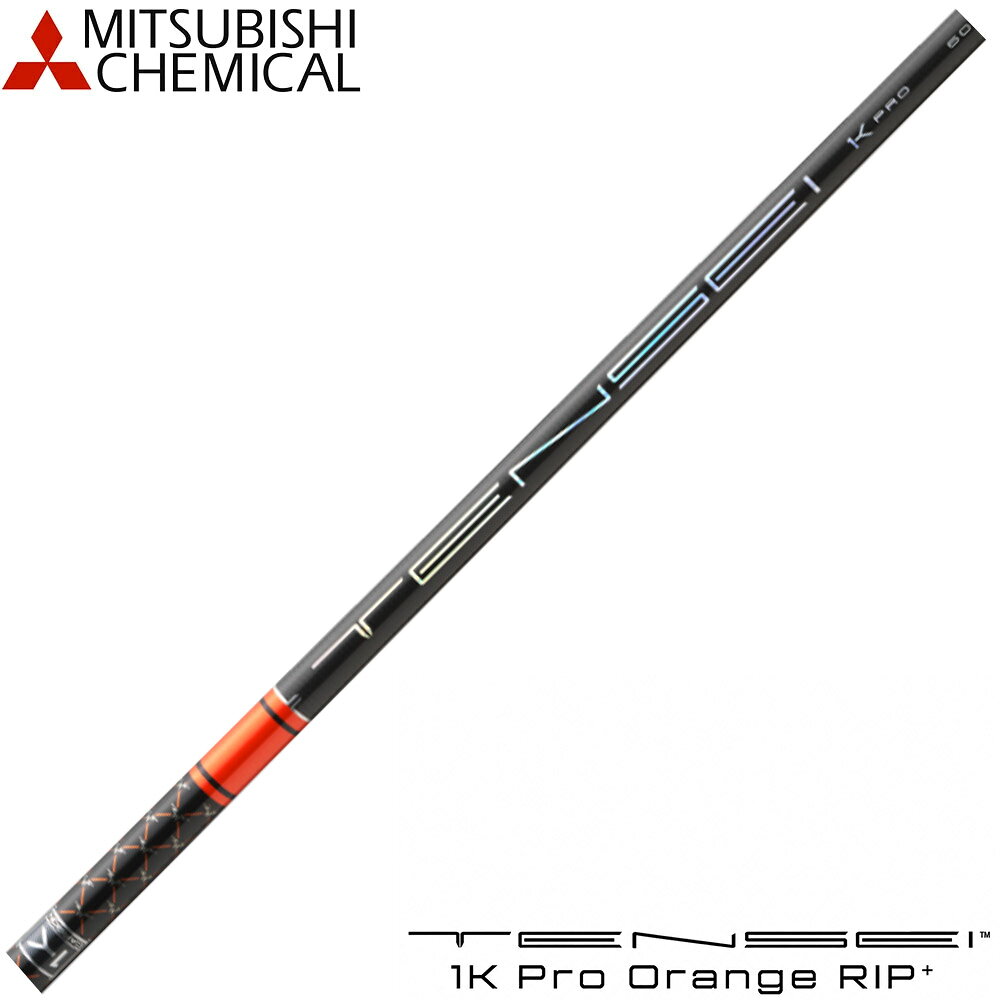 Rakuten Ichiba / AdTENSEI 1K Pro Orange RIP+
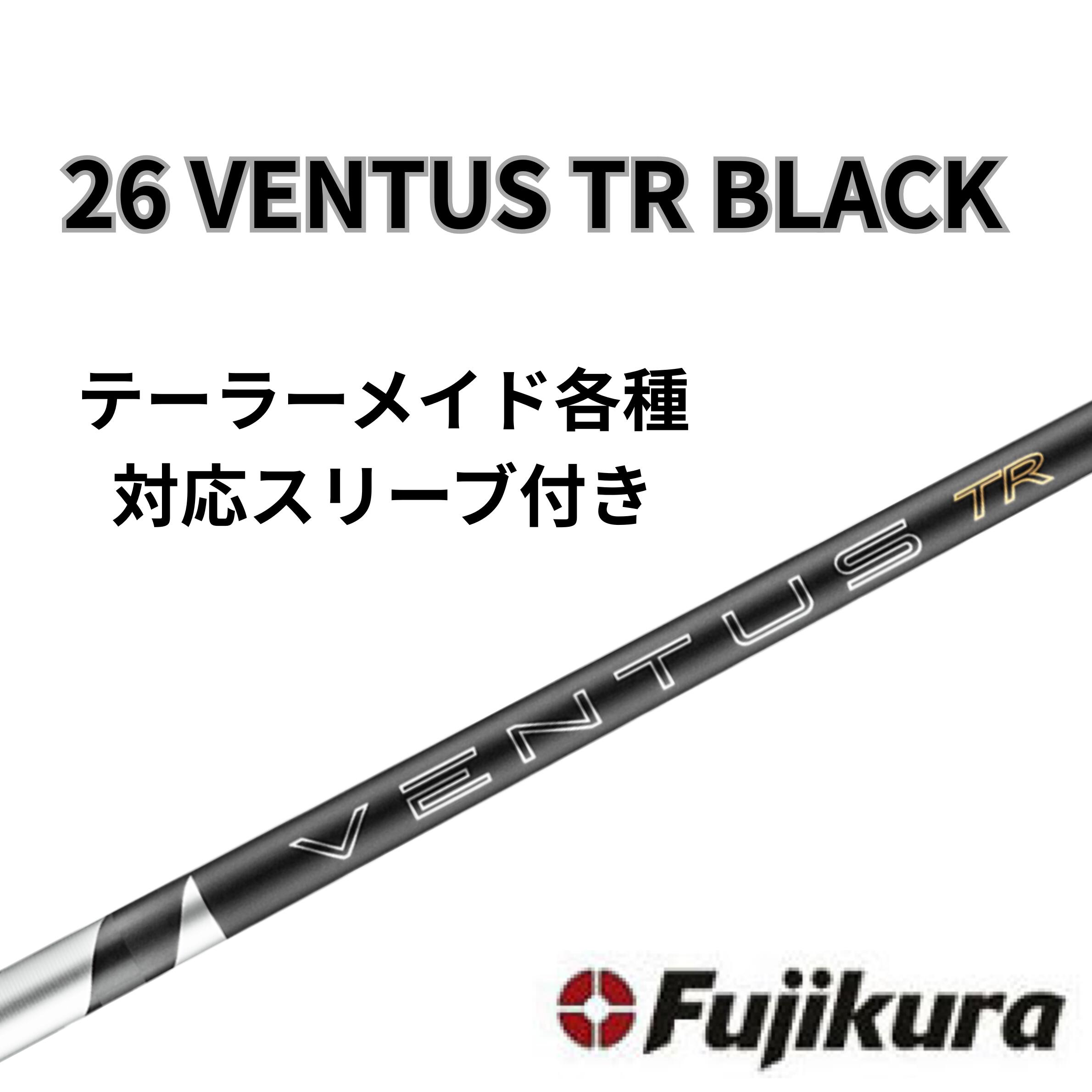 Rakuten Ichiba / Ad26 VENTUS TR BLACK
Product images: Rakuten Ichiba (Ad). Tap an image to go to its Rakuten Ichiba product page.
Shafts I didn't pick, and why
Mitsubishi Chemical Diamana GT: the most weight steps, but I couldn't confirm a price
Weight has five steps, from the 40s to the 80s, from 46g to 85.5g. On step count alone, it has more than any of the four I certified. In the 50s, the R, SR and S are all 56.5g, an interesting build where you choose only the stiffness without changing weight.
I still passed because I couldn't confirm a listed price on the product page of Mitsubishi Chemical's official site on Sep 16, 2026. It missed the fourth condition. I didn't drop it for being good or bad in performance. If a price is confirmed, I'll judge it again on the same conditions.
This list is updated without changing the conditions
When a new shaft comes out, I'll judge it on the same five conditions and add it. I won't move the conditions to slip in a shaft I like.
One more honest note: what I've certified here are shafts you can fit "by the numbers." Whether one suits you is finally decided by the head and your swing. If you choose one of the four, compare its weight with your current club and have a shop measure frequency (oscillations per minute). Once the numbers line up, it starts to mean something to compare from the first shot you hit.
A list of shafts released in 2026 is in New Golf Shafts 2026, and a detailed comparison of the two ¥55,000 shafts is in TENSEI RIP+ vs 26 VENTUS TR BLACK.
About the writer and sources
Written by a gear nerd who studies golf equipment, averages a 72, and plays about 150 rounds a year.
I re-read the numbers against the sources below on Sep 16, 2026. Last updated Sep 16, 2026.
FAQ
What is the "Gear Nerd's Pick" based on?
I decide by reading the maker's official spec tables through a gear nerd's eyes. I limited all five conditions to things you can confirm on the official site. Whether it fits you is finally decided by the head and your swing.
Of the four, which suits a first custom shaft?
The SPEEDER NX WHITE. The four steps from the 40s to the 70s share a design, and with R2 through X, you can retune by moving weight alone. But if you want a 60g-range shaft in R, this model doesn't offer it.
Does that mean you don't recommend the Diamana GT?
I didn't drop it for performance. It has the most weight steps, 5. Because I couldn't confirm a listed price on the official site on Sep 16, 2026, it missed 1 of the conditions and I passed. I'll reassess once a price is confirmed.
Will the conditions for a pick change?
I'll keep the conditions and add new shafts by judging them on the same five.
Ready to choose? Start here
Related reading
Auto Flex compared: four series and who they suit
TENSEI RIP+ vs 26 VENTUS TR BLACK
Sources for this article
- Fujikura official: SPEEDER NX WHITE specs
- Fujikura official: 26 VENTUS TR (BLUE, RED, BLACK)
- Graphite Design official: TOUR AD VF specs
- Mitsubishi Chemical official: TENSEI™ 1K Pro Orange RIP⁺
- Mitsubishi Chemical official: TENSEI™ Pro Orange 1K (previous model)
- Mitsubishi Chemical official: Diamana™ GT
Read next
- A popular read on the same kind of gear:Shaft Flex S vs R
- Another well-read article on the same kind of gear:Can an Iron Shaft Lower Launch and Add Spin?
- Next, a widely read piece on the same kind of gear:Best Driver Shafts 2026
Most read on this site
Voice Caddie Auto Pin (APL): Which Models and Which Courses It Works On
Garmin Approach S72: Release Date, Price and What Changed from the S70
PRGR R35 Wedge vs. R50 Wedge: Differences, Price and Release Date